As drone and Advanced Air Mobility operations grow, much of the attention understandably goes to aircraft, infrastructure and expanding operational capabilities.
Behind each flight, however, is a growing amount of coordination.
Pilots need to be qualified and current. Aircraft need to be available and properly configured. Training, approvals and certifications need to be valid. Customer and mission requirements need to be accounted for, with the right records available when they are needed.
For smaller operations, these requirements can often be managed across spreadsheets, email, shared folders and separate software platforms. As fleets, teams, customers and operating locations grow, keeping that information connected becomes more difficult.
When Manual Coordination Becomes the Bottleneck
Adding another aircraft, pilot, or operating location introduces more information and more relationships to manage.
Before assigning a mission, an operator may need to confirm:
- the aircraft is available and appropriately configured
- the pilot is qualified and current
- required training and certifications are valid
- approvals and documentation are in place
- customer and mission-specific requirements have been met
When this information sits across different systems, operations teams have to bring it together manually. That can mean searching for records, comparing dates, updating spreadsheets, sending reminders and confirming requirements across multiple people or platforms.
These processes may be manageable at a smaller scale, but they become harder to maintain as activity increases. Fragmented information can also make it more difficult to get a clear picture of whether an aircraft, crew and mission are ready to proceed.
Building Compliance Into the Workflow
Compliance is one area where this operational complexity becomes particularly visible.
A growing operator may be tracking pilot certifications, recurrent training, experience, regulatory approvals and mission requirements at the same time. When these records are managed separately from scheduling and day-to-day operations, an expired qualification or missing requirement may not become apparent until a mission is being planned.
Connecting this information earlier in the workflow gives operations teams better visibility.
Pilot qualifications, for example, can be matched against assignment requirements before a mission is confirmed. Certification and recurrent training dates can be monitored in advance, while mission-specific compliance requirements can be incorporated directly into operational checklists.
Records created as part of the workflow can also provide a clearer history of what was completed, by whom and when.
Canadian aviation technology company and CAAM member Vigelon is applying this approach through its operational management platform, which brings together areas including fleet management, mission scheduling, compliance and workforce qualifications.
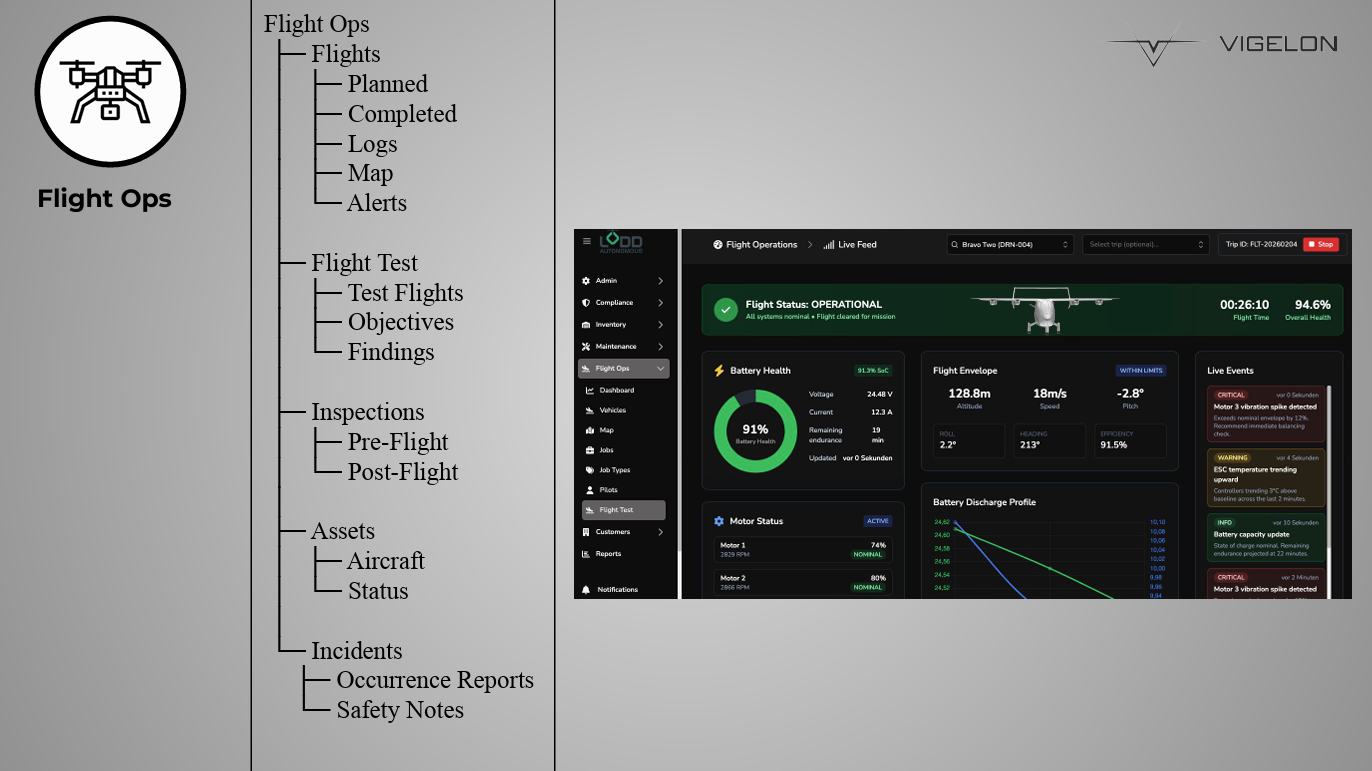
Within its compliance and skill management tools, certifications, training history and experience can be associated with individual team members and referenced when assignments are made. Upcoming certification and training requirements can be flagged in advance, while configurable compliance checks can be incorporated into mission workflows.
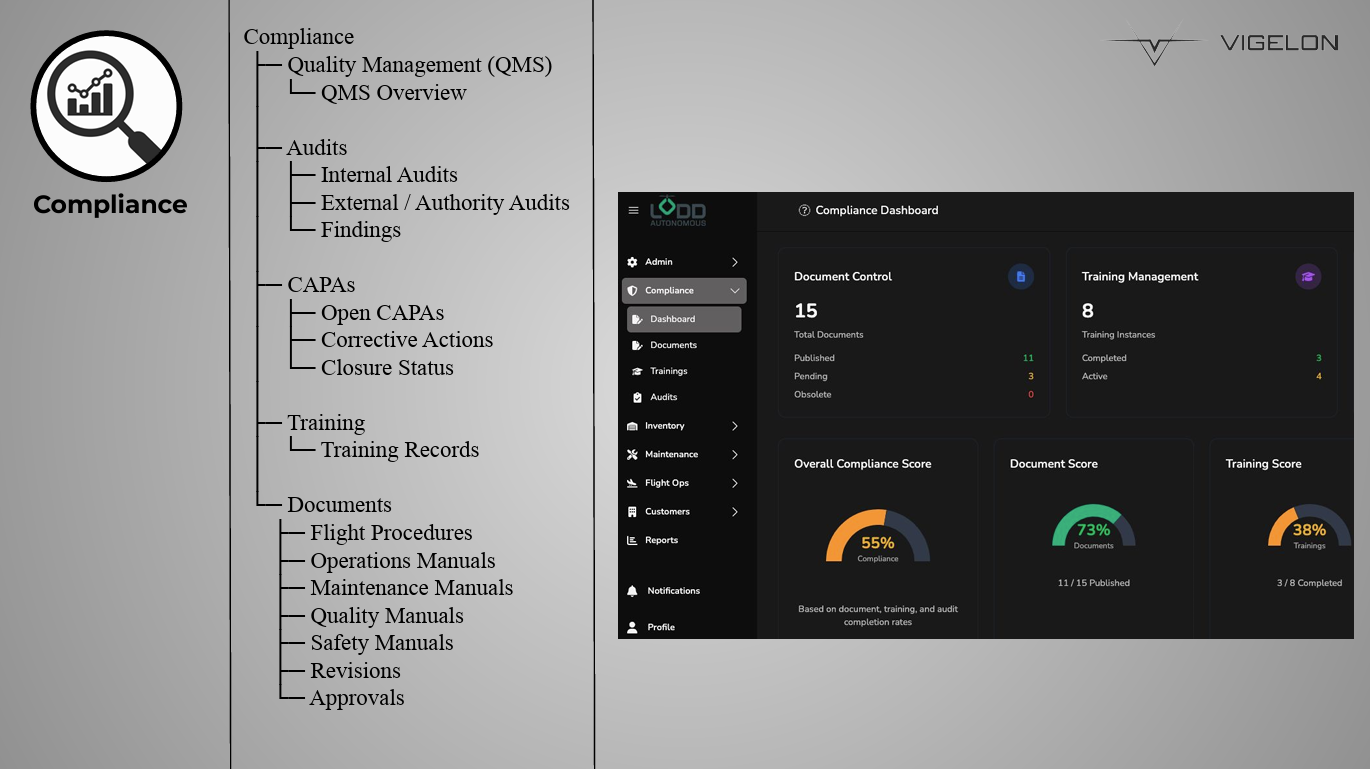
Bringing these areas together can help operators identify potential constraints earlier and reduce the amount of manual coordination required to understand operational readiness.
As drone and AAM organizations move toward larger fleets, more missions and increasingly complex operations, the systems supporting those activities will need to grow with them.
Aircraft capability will remain central to the industry’s progress. So will the operational infrastructure that helps ensure the right aircraft, people, approvals and information come together when a mission is ready to fly.
Visit www.vigelon.com to learn more about Vigelon and its approach to aviation operations management.